
Ten bars, ten printed numbers
There is nothing inferred on this chart. Every bar starts from a figure the brand printed on its own panel, which is the whole difference between this product and most of the shelf.
Written by the Nerve Recovery Max editorial team·Last updated October 11, 2026·How this page was checked
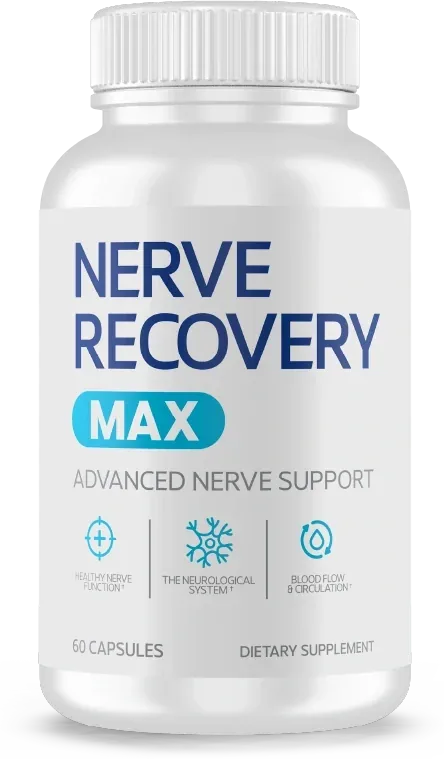
Nerve Recovery Max is a capsule supplement made for everyday nerve comfort. The label serving is two capsules daily with 6-8 oz of water, so a 60-capsule bottle lasts 30 days. Each serving lists 400 mg of alpha lipoic acid, 150 mg of benfotiamine and vitamins D3, B12 and folate. It is not a drug or a neuropathy medicine, so have a doctor check any tingling first.
180-day money-back seal · from $1.63 a day · terms shown at checkout · ships from the US
No proprietary blend · every amount printed
Ten ingredients and the amount the label prints for each, per two-capsule serving


Nerve Recovery Max is a 60-capsule bottle sold for nerve comfort, at two capsules a day. Start with the unusual thing, because it decides everything else on this page: the Supplement Facts panel prints an amount against every single ingredient. Ten of ten, no proprietary blend, nothing hidden inside a total. That is rare enough on this shelf to be the best thing about the product, and it means a reader can check the whole label against published figures without leaving it. So we did. Benfotiamine at 150 mg is exactly the monotherapy dose of the trial we opened. Alpha-lipoic acid at 400 mg is two-thirds of the 600 mg SYDNEY 2 concluded gives the optimum risk-to-benefit ratio. Vitamin D3 is a full Daily Value, folate 96% of one and B12 83%. Against that: acetyl L-carnitine is printed at 50 mg, and the Cochrane review of its trials says an effect may be present at doses greater than 1500 mg/day but not at lower doses — this is a thirtieth of that. Three more lines are 25 mg powders we can find no comparison for. One vitamin line prints micrograms against a milligram Daily Value. The packs run $69, $177 and $294 — $2.30, $1.97 and $1.63 a day — with no struck-through was figure anywhere, though the product pack supplied to this desk published no price at all and we say where ours came from.
Four steps. The brand's own three-step explainer says follow label directions, product formula and daily routine; this is the same idea done with the figures the label actually prints.
Ten dietary ingredients, and beside each one a number. No proprietary blend, no shared total, no asterisk standing in for a figure. On most products in this category reading stops at a single total and a list of names; here it starts.
Every figure on this panel is per two capsules. It is the commonest misreading of a label built this way, and it halves or doubles everything that follows. One capsule is 200 mg of alpha-lipoic acid, not 400 — and 75 mg of benfotiamine, which stops matching the trial.
This is the step the brand cannot do for you and the one this desk exists to do. For every ingredient with a published dose, we opened the trial or the fact sheet, took the figure, and set it against the printed amount. Not a ratio we invented — the number in the paper, beside the number on the bottle.
Two of them fill their track. One reaches two-thirds. Three are vitamins at or near a full Daily Value. Three have no comparison we would publish. And one — acetyl L-carnitine — is one-thirtieth of the smallest dose in its own Cochrane review, which says in terms that it does not expect an effect below that.
Every figure in those four steps is printed on the bottle or quoted from a source we opened. Nothing on this page is an estimate.
Scroll. Each bar is one ingredient's printed amount drawn as a fraction of the dose a published trial or a Daily Value used. A full bar means the label meets the figure. A stub means it does not.
Every bar is a printed amount. Not one is a ceiling or an estimate.
There is nothing inferred on this chart. Every bar starts from a figure the brand printed on its own panel, which is the whole difference between this product and most of the shelf.
Benfotiamine at 150 mg is the monotherapy dose from the trial, to the milligram. Vitamin D3 at 20 mcg is a Daily Value exactly. Folate and B12 come in just behind at 96% and 83%.
Alpha-lipoic acid, 400 mg against the 600 mg SYDNEY 2 called the optimum risk-to-benefit ratio after testing 600, 1,200 and 1,800 mg in 181 patients. The same order of magnitude, and not the figure that was tested.
Acetyl L-carnitine, 50 mg against 1,500 mg at the very lowest in its Cochrane review — which states that an effect may be present above 1,500 mg a day but not below it. The review names the threshold; the label prints a thirtieth of it.
| Nerve Recovery Max | |
|---|---|
| Form | Capsules. Hypromellose shell, so not gelatin |
| Net quantity | 60 capsules |
| Serving | 2 capsules — every panel figure is per two, not per one |
| Supply | 30 days a bottle |
| Dietary ingredients | 10, each with its own printed amount |
| Proprietary blend | None |
| Largest active | Alpha lipoic acid, 400 mg |
| Ingredient at its studied dose | Benfotiamine, 150 mg |
| Weakest line | Acetyl L-carnitine, 50 mg against 1,500 mg at the very lowest |
| Printed percentages | 4, of which 3 are correct |
| Front-panel claims | 3, each daggered to the FDA disclaimer |
| Country of origin | Made in USA with global ingredients, on the bottle |
| Guarantee | 180 days on the supplied seal; the written brief declines to confirm it |
| Price | Not published to this desk |
| Distributed by | Nerve Recovery Max, Akron, OH 44301 |
| Manufacturer | Not named anywhere on the pack |
| Lot / CoA reference | NRM-26/NE-2007 · NRM-2007-26-NE |
Ten printed amounts, each against the dose its own research used. It takes two minutes and it is the only thing on this page that will change your mind either way.
Tap a name. The bar underneath is that ingredient's printed amount as a fraction of the dose a published trial or a Daily Value used.
What our sources recordSYDNEY 2, 181 patients, 5 weeks
The largest thing in this capsule and the one with the best evidence behind it. The SYDNEY 2 trial gave 181 diabetic patients oral doses of 600, 1,200 or 1,800 mg once daily for five weeks and concluded that “an oral dose of 600 mg once daily appears to provide the optimum risk-to-benefit ratio.” 400 mg is two-thirds of that — the same order of magnitude, which is more than most labels in this category manage, and still not the dose that was tested.
What our sources record6-week trial, 36 patients, three arms
Exactly the monotherapy dose the trial used. The study we opened ran three arms over six weeks and describes its monotherapy arm as “3 x 1 tablets/day, = 150 mg benfotiamine/day.” Its conclusion is that benfotiamine “is most effective in large doses” — its high arm was 320 mg/day — but that “even in smaller daily dosages, either in combination or in monotherapy, it is effective.” 36 patients is a small trial. The number on this label is still the number in it.
What our sources recordCochrane review of three randomised trials
This is the line that does not survive. The Cochrane review we opened describes the trials as using “2000 mg/day” in one and “1500 mg/day or 3000 mg/day” in the other two, and states that “any effect may be present at doses greater than 1500 mg/day but not at lower doses.” 50 mg is one-thirtieth of the smallest of those. The reviewers are also “very uncertain” that it works at all.
What our sources recordNIH Office of Dietary Supplements
83% of a full day's Daily Value, and on this product that matters more than the percentage suggests. ODS records that in B12 deficiency “neurological changes, such as numbness and tingling in the hands and feet, can also occur” — the exact symptom this product is sold for. It also records that metformin “might reduce the absorption of vitamin B12 and significantly reduce serum vitamin B12 concentrations.”
What our sources recordNIH Office of Dietary Supplements
A full Daily Value, exactly. ODS: “The DV for vitamin D is 20 mcg (800 IU) for adults and children age 4 years and older.” That is also the RDA for adults over 70, and above the 15 mcg RDA for everyone between 19 and 70. There is nothing to criticise in this line.
What our sources recordNIH Office of Dietary Supplements
96% of the Daily Value as printed, and the percentage checks out. The two figures inside the line do not reconcile with each other, which is dealt with separately below — ODS gives the conversion as “mcg DFE = mcg naturally occurring folate + (1.7 x mcg folic acid)” and 230 × 1.7 is 391, not 383.
What our sources recordNIH Office of Dietary Supplements
The unit cannot be right. ODS: “The DV for vitamin B6 is 1.7 mg for adults and children age 4 years and older.” The panel prints 1.7 mcg and claims 100% of the Daily Value for it. 1.7 micrograms is a thousandth of 1.7 milligrams, which is 0.1% of the DV, not 100%. Either the number is right and the percentage is wrong by a factor of a thousand, or — far more likely — the unit is a typo for mg and the percentage is correct.
What our sources recordNCCIH: evidence insufficient
Twenty-five milligrams of root powder, not a standardised extract. NCCIH records that ashwagandha “may be safe” for up to three months and that the evidence for the uses it is sold for is insufficient. We found no trial of ashwagandha for nerve symptoms at any dose that we would cite, so we publish no comparison for this line.
What our sources recordno source this desk uses covers it
Twenty-five milligrams of broccoli leaf powder. We looked for a monograph, a government fact sheet or a trial covering broccoli powder at any dose for nerve symptoms and found none we would cite, so we publish no dose comparison and no effect for it. It is roughly the dry weight of a third of a gram of vegetable.
What our sources recordNCCIH: not enough evidence
Twenty-five milligrams of root powder, which is not a curcumin extract and does not carry a piperine or phospholipid absorption aid. NCCIH's position is that there is not enough evidence to support turmeric for any health condition. We publish no dose comparison for this line.
Positions are the printed order on the panel. Every amount shown is the brand’s own printed figure — nothing here is derived. The bar is that figure as a fraction of the dose a published trial or a Daily Value used, capped at 100%; three ingredients have no bar because we found no published figure we would cite for them.
Six of the ten could be drawn. The other four could not, and the reasons are the review.
A printed amount that reaches the figure its own research usedA printed amount that does notWhat the research, or the Daily Value, usedone linear scale per row — compare the fraction filled, not the length
Ten ingredients are printed on this panel, every one with its own amount. Six could be drawn here. The other four could not, and the reasons are the review.
Three are powders with no comparison we would publish. Ashwagandha root, broccoli leaf and turmeric root, 25 mg apiece. NCCIH records that some ashwagandha preparations may help insomnia and stress — nothing about nerves — and that we do not know enough to conclude turmeric is beneficial for any health purpose. On broccoli leaf powder we found no source we would cite at all.
And one cannot be drawn because the line cannot be right. Vitamin B6 is printed as 1.7 micrograms against a Daily Value the NIH gives as 1.7 milligrams, with 100%% claimed beside it. There is no honest bar to draw for a figure that is either right or a thousand-fold out.
Every bar here is a printed amount. Not one is a ceiling, an estimate or an inference — which is the whole difference between this panel and most of the shelf.
Every dietary ingredient on this panel carries its own figure. Nothing has to be inferred from a listing order and nothing is bounded from above. This is the thing that makes the rest of this site possible.
Two-thirds of the once-daily oral dose that trial concluded gave the optimum risk-to-benefit ratio. The same order of magnitude, not a token.
The six-week trial we opened describes its monotherapy arm as 150 mg benfotiamine a day. That is the figure on this label, to the milligram.
One-thirtieth of the smallest dose in the Cochrane review, which says in terms that an effect may be present above 1,500 mg a day but not below it.
Vitamin D3, folate and B12 are all correct to the nearest whole percent. Vitamin B6 prints 1.7 mcg and claims 100% of a Daily Value that is 1.7 mg.
A vegetable capsule — hypromellose, not gelatin — with oat fiber, brown rice flour, magnesium stearate and silicon dioxide as the other ingredients.
See the full Supplement Facts panel for every line on the label.
Read at native resolution from the flat supplied with the product.


Twenty markers across the whole wrap — including the four percentages, the one that cannot be right, and the seal that is not a standard.
Swipe the label sideways to reach every marker.
Tap a numbered marker on the label to read what that line says, and what it leaves out.
| As printed on the panel | Per 2 capsules | % Daily Value |
|---|---|---|
| Vitamin D3 (as Cholecalciferol) | 20 mcg | 100% |
| Vitamin B6 (as Pyridoxine hydrochloride) | 1.7 mcg | 100% |
| Folate | 383 mcg DFE (230 mcg folic acid) | 96% |
| Vitamin B12 (as Methylcobalamin) | 2 mcg | 83% |
| Alpha Lipoic Acid | 400 mg | ** |
| Benfotiamine | 150 mg | ** |
| Acetyl L-Carnitine | 50 mg | ** |
| Ashwagandha Powder (Root) | 25 mg | ** |
| Broccoli Powder (Brassica Oleracea)(leaf) | 25 mg | ** |
| Turmeric Powder (Root) | 25 mg | ** |
Every one of the ten dietary ingredients carries its own printed amount. There is no proprietary blend on this panel, no total covering several names, and no descending-order arithmetic to do. That is rare enough to be the best thing about this product: you can check this entire label against published figures without leaving it.
The footnote** Daily Value (DV) not established.
The ** appears beside the six non-vitamin ingredients and it is correct for all six: the FDA has set no Daily Value for alpha-lipoic acid, benfotiamine, acetyl L-carnitine, ashwagandha, broccoli powder or turmeric, so there is no percentage to print.
Other ingredientsHypromellose (vegetable capsule), Oat Fiber Powder, Brown Rice Flour, Magnesium Stearate, Silicon Dioxide.
Hypromellose means the capsule shell is cellulose rather than gelatin, which is the line a vegetarian buyer needs. Oat fiber powder means this is not a gluten-free product, and none is claimed.
The four percentages, recomputedVitamin D3: 20 mcg against a 20 mcg Daily Value is 100%, exactly as printed. Folate: 383 mcg DFE against 400 is 95.75%, correctly rounded to 96%. Vitamin B12: 2 mcg against 2.4 is 83.3%, correctly rounded to 83%. Three of the four are right.
Vitamin B6 is not. The Daily Value is 1.7 milligrams. The panel prints 1.7 micrograms and claims 100% of it beside them. Those are a thousand-fold apart. The likeliest reading is a typo for mg — which would make the percentage correct — but we cannot print a correction as though it were the label.
A percentage is the one number on a panel a reader can check without leaving the label. We check every one we find.
| Nutrient | Declared | % DV printed | Daily Value | Our figure | Verdict |
|---|---|---|---|---|---|
| Vitamin D3 | 20 mcg | 100% | 20 mcg | 100.0%, exactly as printed | correct |
| Vitamin B6 | 1.7 mcg | 100% | 1.7 mg | 0.1%. The percentage is only correct if the unit is milligrams, and the panel prints micrograms | the unit cannot be right |
| Folate | 383 mcg DFE | 96% | 400 mcg DFE | 95.75%, which to the nearest whole percent is 96% | correct |
| Vitamin B12 | 2 mcg | 83% | 2.4 mcg | 83.3%, which to the nearest whole percent is 83% | correct |
A percentage on a panel is the one number a reader can check without leaving the label, and almost nobody does. We recompute every one we find. On this panel there were three, and all three are correct.
What that is worthMore than it sounds. Of the products this desk has reviewed, this is the first whose printed percentages come through a recheck with nothing to report. It is also, on a gummy, the part of the panel most people actually need: the added-sugar line.
And what it is not worthCorrect arithmetic about sugar and sodium says nothing about the nine ingredients underneath, because eight of those carry no figure to check. A well-kept nutrition panel sitting above an 82 mg blend is exactly the shape of this product.
This is the reading everything else on the site depends on, so it goes first.
There is no proprietary blend on this panel. Every dietary ingredient carries its own printed amount. That single fact changes what a reader can do: instead of inferring an upper bound from a listing order, you can take each figure, put it beside the dose a published trial actually used, and mark it.
We have done exactly that for all ten. Two land on the studied figure, one lands near it, three are full or near-full Daily Values, three have no comparison we would publish, and one is a unit that cannot be right.
The SYDNEY 2 trial gave 181 diabetic patients in Russia and Israel once-daily oral alpha-lipoic acid at 600, 1,200 or 1,800 mg, or placebo, “for 5 weeks after a 1-week placebo run-in period.”
All three doses moved the Total Symptom Score by a similar amount — “4.9 points (51%) in ALA600, 4.5 (48%) in ALA1200, and 4.7 (52%) in ALA1800” — which is why its conclusion is a dose recommendation rather than a more-is-better one: “An oral dose of 600 mg once daily appears to provide the optimum risk-to-benefit ratio.”
This label prints 400 mg. That is two-thirds of the recommended dose, and it is the closest any ingredient on this panel comes to a tested figure without being it. Whether two-thirds is enough is not something the trial answers.
The six-week trial we opened randomised 36 patients aged 40 to 70 into three arms of twelve. Its monotherapy arm is described as “3 x 1 tablets/day, = 150 mg benfotiamine/day.”
This label prints 150 mg. Not a rounding, not a fraction — the figure that was tested.
Two qualifications, both the trial's own. Its conclusion is that benfotiamine “is most effective in large doses” and its high arm was 320 mg/day, more than twice what is here. And twelve patients an arm over six weeks is a small, short study. The dose is right; the evidence under it is thin.
The Cochrane review of acetyl-L-carnitine for diabetic peripheral neuropathy describes the trials it pooled: “in one trial the dose of ALC was 2000 mg/day, and in the other two trials, it was 1500 mg/day or 3000 mg/day.”
Its finding is cautious in both directions. On whether it works at all: “We are very uncertain whether ALC causes a reduction in pain after 6 to 12 months' treatment in people with DPN… as the evidence is sparse and of low certainty.”
And on dose, it is explicit: “any effect may be present at doses greater than 1500 mg/day but not at lower doses.”
This label prints 50 mg. That is one-thirtieth of the smallest dose in the review, and the review has already said that below 1,500 mg it does not expect an effect. This is the line we would take off the panel.
Three B vitamins and a vitamin D, three of which check out exactly.
Vitamin B12 at 2 mcg is 83% of the Daily Value, and on a nerve product that is the line to read twice. The NIH Office of Dietary Supplements records that in B12 deficiency “neurological changes, such as numbness and tingling in the hands and feet, can also occur” — which is the symptom this bottle is bought for. It also records that metformin “might reduce the absorption of vitamin B12 and significantly reduce serum vitamin B12 concentrations.”
If you take metformin and have tingling in your feet, that is a conversation with your prescriber and a blood test, not a bottle. But it is also the one mechanism on this label where a supplement could plausibly matter, and it is worth knowing that it is here.
Ashwagandha root, broccoli leaf and turmeric root, 25 mg each, as powders.
On ashwagandha, NCCIH records that some preparations “may be effective for insomnia and stress” and that it “may be safe when taken in the short term (up to 3 months)”, with “a number of cases that link liver injury to ashwagandha supplements.” Nothing about nerves.
On turmeric: “We don't know enough to definitively conclude if turmeric or curcumin is beneficial for any health purposes.” This is also plain root powder rather than a bioavailable curcumin formulation — which is the safer choice, since NCCIH notes that the highly bioavailable versions “may harm your liver.”
On broccoli leaf powder we found no source we would cite at all, so we publish nothing for it.
Scroll or use the arrows. Six cards, and the first one explains the other five.
10 of 10 quantified
Start here, because it is the rarest thing about this product and the reason this site can be written at all. There is no proprietary blend. Every one of the ten dietary ingredients carries its own figure, so not one of them has to be guessed at, inferred from a listing order, or bounded from above. A reader can check every line of this panel against a published dose without leaving the label. Most of this category does not allow that, and on the last product this desk read, eight of nine ingredients had no number at all.
400 mg and 150 mg
Alpha-lipoic acid at 400 mg against the 600 mg once-daily dose the SYDNEY 2 trial called the optimum risk-to-benefit ratio: two-thirds of it. Benfotiamine at 150 mg against the 150 mg/day monotherapy arm of the trial we opened: exactly it. Neither is a rounding of a studied figure down to a token. Whatever else is on this label, somebody costed these two lines properly.
50 mg vs 1,500 mg
Acetyl L-carnitine is printed at 50 mg. The Cochrane review of the randomised trials describes doses of 1,500, 2,000 and 3,000 mg a day, and says in terms that “any effect may be present at doses greater than 1500 mg/day but not at lower doses.” This is not a small shortfall. It is the review naming the threshold and the label printing a thirtieth of it.
1.7 mcg at 100% DV
The Daily Value for vitamin B6 is 1.7 milligrams. The panel prints 1.7 micrograms and claims 100% of the Daily Value beside it. Those two statements are a thousand-fold apart and cannot both be true. The likeliest explanation is the dullest one — a typo for mg — and we would rather say that plainly than pretend a printing slip is a scandal. But it is on the panel, it is the only one of four percentages that fails a recheck, and we are not going to print it without saying so.
75 mg of the 700
Ashwagandha root, broccoli leaf and turmeric root, 25 mg apiece, as powders rather than standardised extracts. Together they are about a tenth of the capsule's active weight. We found no dose comparison for any of the three that we would publish, so we publish none. They are not doing harm at 25 mg; they are also unlikely to be the reason anything on this label works.
3 claims, 1 dagger
Unlike the last product this desk read, this one does carry structure-function claims on the front panel: healthy nerve function, the neurological system and blood flow & circulation, each with a dagger. The dagger resolves to the FDA disclaimer on the back. That is the correct way round. A claim with its disclaimer attached is honest labelling; the thing to be wary of is a claim with no dagger, or a dagger with no claim.
Published in full, as supplied, with what each one does and does not say.


Vitamin B12 is 2 mcg here, 83% of a Daily Value, and it is the smallest active on the panel. It is also the only ingredient in this bottle with a documented, specific, checkable link to the symptom the product is sold for.
The NIH Office of Dietary Supplements records that in B12 deficiency “neurological changes, such as numbness and tingling in the hands and feet, can also occur”, and that these “can occur without anemia, so early diagnosis and intervention is important.”
And it records something else: metformin “might reduce the absorption of vitamin B12 and significantly reduce serum vitamin B12 concentrations.”
Put those two sentences together. If you take metformin and you have tingling in your feet, there is a specific, cheap, checkable explanation for it that is not this bottle — and finding out is a blood test, not a purchase. We would rather you did that first and bought nothing.
Because it is the single most useful thing on this site, and because a reader who finds out they have a B12 deficiency has been better served by us than by a sale.
The ring is a 24-hour clock. The pale band is everything the bottle permits, which is all of it — the label gives a dose and no time.
The bottle carries no health claim at all. Not one. There is no structure-function sentence on the wrap, which means there is nothing on the bottle for the boxed FDA disclaimer to be asterisked to — and the disclaimer is printed anyway.
Look at the front and notice what is not there. No supports energy. No asterisk. No structure-function sentence of any kind. A gold crest, a wordmark, a Brazilian flag and 30 Gummies | Dietary Supplement — and that is the whole of it.
Every claim attached to this product lives somewhere else: on the sales page, in the listing artwork, or on a seal. That is unusual, and as label discipline it is the right way round. Each claim is taken separately below, with what it rests on.
A structure-function claim, permitted with the dagger it carries. What it rests on, ingredient by ingredient: alpha-lipoic acid at 400 mg against a 600 mg studied dose, benfotiamine at 150 mg against the 150 mg monotherapy arm, and B12 at 83% of a Daily Value, where deficiency is a documented cause of numbness and tingling. That is three real lines. It also rests on acetyl-L-carnitine at a thirtieth of the studied dose, and on three 25 mg powders with no comparison.
The vaguest of the three and the hardest to attach to anything. No ingredient on this panel has a published trial for the neurological system as such; the trials that exist are for diabetic peripheral neuropathy specifically, in people who already have it. The claim is lawful and daggered. It is also close to meaningless, and we would rather say so.
This one is weakest of all on this formula. None of the ten ingredients is a circulation agent at the amounts printed, and no source we opened connects any of them to blood flow at these doses. Alpha-lipoic acid's trials measured symptom scores, not perfusion. We found nothing to support this claim and we publish nothing to support it.
The qualified claim, and the right one. The FTC reserves an unqualified Made in USA for products that are “all or virtually all” made domestically; adding with global ingredients is the honest construction for a supplement whose raw materials are sourced internationally, which almost all of them are. No conflict with any other mark in the pack.
Good Manufacturing Practice, certified. GMP is a process standard: it says the facility documents and controls how it makes things. It is not a test of this bottle, it does not verify that the panel's figures are what is in the capsule, and it is not an FDA approval of anything. No certifying body and no certificate number is named on the pack, so we cannot check the mark against a register.
This one means nothing. It is not a standard, not a certification, not an accreditation, and not a grammatical English phrase. No body issues it and no criterion defines it. It sits on the bottle in the same visual register as the GMP roundel, which is the problem: a decorative phrase drawn to look like a credential.
A recipe statement rather than a certification. No certifying body — Non-GMO Project or otherwise — is named on the pack, and no verification number appears. It may be perfectly true. It is not a mark anybody independent has checked.
No added rather than free from, which is the weaker and more honest phrasing: it describes the recipe, not a test of the finished capsule. For a serious allergy, a recipe statement is not an allergen test, and the pack names no allergen testing.
Not a claim but worth naming, because it is the line a vegetarian buyer needs and it is in the other-ingredients list rather than on the front. The shell is cellulose, not gelatin. No vegetarian or vegan certification is claimed, and the oat fiber powder means this is not a gluten-free product.
Tap a card to read the quotation and where it came from.
Supplied in the same pack as the written brief that declines to confirm it.

This is the unusual case where you can. Every amount is printed, so every line can be put beside a published figure without guessing. If that is the kind of buyer you are, this panel rewards you more than most.
400 mg is two-thirds of the dose SYDNEY 2 called optimum, and alpha-lipoic acid is the one ingredient NCCIH names as having weak evidence of possible benefit for diabetic neuropathy. If you were going to buy ALA anyway, this is a reasonable way to get most of a dose alongside three B vitamins.
Not as a reason to buy — as a reason to read the B12 line and then book a blood test. The NIH records that metformin can significantly reduce serum B12, and that low B12 causes exactly those symptoms. Find out which problem you have first.
Nothing on this panel is hidden. There is no 82 mg total covering nine names, no descending-order inference, no ceiling arithmetic. Whatever you think of the amounts, you are being shown them.
Hypromellose, named in the other-ingredients list. That is the line most capsule labels leave a vegetarian buyer to guess at.
The bottle says what it is: a dietary supplement with three daggered structure-function claims. It does not say it treats neuropathy, and neither do we.
50 mg against 1,500 mg at the very lowest in the trials, and a Cochrane review that says an effect may be present above 1,500 mg a day but not at lower doses. If ALC is what you came for, this is not a source of it.
This is 400 mg. Two-thirds is not nothing, but if you are following the SYDNEY 2 figure specifically, a single-ingredient ALA capsule will get you there and this will not.
Nothing on the label or in any source we opened supports a timeline of any kind. SYDNEY 2 ran five weeks; the benfotiamine trial ran six; the Cochrane review looked at six to twelve months. One of the reviews supplied with this product says plainly that he wanted five-day relief and it did not happen.
A supplement is not a substitute for finding out what is causing it. Diabetic, chemotherapy-induced, B12-deficiency and compressive neuropathies are different problems with different answers, and only one of them is plausibly helped by anything in this bottle.
The bottle's own caution excludes you, and NCCIH separately records that turmeric supplements during pregnancy may be unsafe.
NCCIH records a number of cases linking liver injury to ashwagandha supplements, and liver damage reported with bioavailable curcumin formulations. The amounts here are small — 25 mg each — but this is a conversation to have with a clinician rather than a risk to take on a label's word.
Nothing is sent anywhere and nothing is stored. The answers stay in your browser.
0 of 6 answered
No trial exists on this combination, so no side-effect profile exists for it either. What can be published is what our sources record about the individual ingredients, and the bottle's own caution.
The bottle, verbatim: Do not exceed recommended dose. Pregnant or nursing mothers, children under the age of 18, and individuals with a known medical condition should consult a physician before using this or any dietary supplement. That last clause is doing a great deal of work on a product sold for nerve symptoms, because most people buying it have one.
On ashwagandha, NCCIH records that it “may be safe when taken in the short term (up to 3 months)”, that “there is not enough information to allow conclusions about its long-term safety to be reached”, and that “although it is rare, there have been a number of cases that link liver injury to ashwagandha supplements.” There is 25 mg of it here — and the six-bottle pack is six months, which is twice the period NCCIH describes.
On turmeric, NCCIH records that plain root powder like this one is “likely safe… in the recommended amounts for up to 2 or 3 months”, that it “can cause adverse effects such as nausea and vomiting, acid reflux, stomach upset, diarrhea, or constipation”, and that “the use of turmeric supplements during pregnancy may be unsafe.”
On the category, NCCIH is blunt: “Some dietary supplements may have side effects, and some of these side effects, such as kidney damage, can be serious.”
And on vitamin B6, which is worth putting in proportion rather than leaving as a scare: very high doses do damage nerves — the NIH records that “chronic administration of 1–6 g oral pyridoxine per day for 12–40 months can cause severe and progressive sensory neuropathy”, with a Tolerable Upper Intake Level of 100 mg a day. Neither figure is remotely close to this label on either reading of its B6 line.
Photograph the panel and show it to whoever manages your prescriptions before the first capsule. That is the whole of our safety advice, and it is worth more than anything else on this page.
| Ingredient | Printed | What the research used | Verdict |
|---|---|---|---|
| Benfotiamine | 150 mg | 150 mg a day, the monotherapy arm | At the studied dose |
| Vitamin D3 | 20 mcg | 20 mcg Daily Value | A full Daily Value |
| Folate | 383 mcg DFE | 400 mcg DFE Daily Value | 96% of it |
| Vitamin B12 | 2 mcg | 2.4 mcg Daily Value | 83% of it |
| Alpha lipoic acid | 400 mg | 600 mg once daily (SYDNEY 2) | Two-thirds of it |
| Acetyl L-carnitine | 50 mg | 1,500 mg a day at the very lowest | 30× short |
| Vitamin B6 | 1.7 mcg | 1.7 mg Daily Value | The unit cannot be right |
| Ashwagandha (root powder) | 25 mg | no figure we would cite | No comparison |
| Broccoli (leaf powder) | 25 mg | no figure we would cite | No comparison |
| Turmeric (root powder) | 25 mg | no figure we would cite | No comparison |
The label: As a dietary supplement, adults take two (2) capsules daily. For best results, take with 6-8 oz of water or as directed by a healthcare professional. Two capsules, 60 to a bottle, thirty days.
Ours. Every figure on the panel is per two capsules. Splitting the serving halves everything, including the benfotiamine — which at 150 mg is the one line on this label that matches a trial exactly, and at 75 mg is not.
Ours, and the most useful thing in this pack. Nine of the ten reviews supplied with this product describe a cue rather than an effect: before league night, after the trash run, when the bus app opens. A capsule you forget does nothing at all.
The trials behind the two best-dosed ingredients ran five and six weeks. The acetyl-L-carnitine review looked at six to twelve months. The supplied review summary says most people waited three to six weeks. Nobody published a five-day timeline, whatever you were shown.
The label's own instruction: Keep out of the reach of children. Do not use if safety seal is damaged or missing. Store in a cool, dry place. No temperature range is given, which is the vaguer of the two conventions.
Two capsules a day is fixed by the label. Pick a pack and see where it lands against the 180-day window on the seal.
Pack size
Capsules a day — fixed at two, which is what the label says
Two capsules a day, sixty to a bottle, so a bottle is thirty days. Every per-day figure below is that arithmetic and nothing else.
Thirty days, which is shorter than both of the trials behind this formula's two best-dosed ingredients.
180-day money-back seal · no subscription

Ninety days is the longest NCCIH describes ashwagandha as safe for, and it leaves ninety days of the window still to run.
180-day money-back seal · no subscription

A hundred and eighty days of supply against a 180-day window, so the last bottle opens on the day it closes. Not one of the ten supplied reviews bought this pack.
180-day money-back seal · no subscription
No struck-through “was” price is published for this product, and that is a point in its favour. Where a sales page shows a price crossed out beside a lower one, the crossed-out number is a claim about what the product used to sell for — a claim almost nobody can verify and almost nobody checks. There is nothing of that kind here. · The money-back window runs from purchase, not from delivery · What that actually means
Two capsules a day, 60 capsules a bottle. One bottle is thirty days. That is the denominator for everything below.
One bottle, $69. Thirty days, so $2.30 a day. It is the only pack with no free-shipping copy attached to it, so check what postage adds before you compare it with the others.
Three bottles, $59 each, $177. Ninety days, so $1.97 a day, with free shipping. That is 15% less per day than a single bottle.
Six bottles, $49 each, $294. A hundred and eighty days, so $1.63 a day, with free shipping. Cheapest per day on offer, and the longest commitment by a distance.
There is no struck-through “was” price anywhere on this product, and that is worth praising. A crossed-out figure beside a lower one is a claim about what something used to sell for — a claim almost nobody can verify and almost nobody checks. Most of this category prints one. This does not.
One thing to know about where these figures came from. The product pack supplied to this desk contains no price at all; its instruction is to print whatever the live checkout prints, and the sales page it names refuses automated requests. The figures above were confirmed to us separately. Read the checkout screen before you pay — it is the only source that has to be right.
The six-bottle pack is 180 days of supply against a 180-day window, so the last bottle opens on the day the window closes. The three-bottle pack finishes with ninety days of window still to run, which is why it is the one we would start with.
nerverecoverymax.com, with (888) 869-0440 and [email protected]. This is the only web address the manufacturer put on the product itself, and it is the one we would start from.
The buy buttons here go to the checkout we were given. We earn a commission on orders placed through them, which is disclosed in the footer of every page. The price and the refund terms appear on that screen, not on this one.
A search for this brand name returns many different domains describing themselves as the official website, several of which spell the brand differently. We have not opened them and we accuse none of them of anything. We are telling you that the printed label is the thing to trust.
A search returns an Amazon listing for a product of this name. We could not open it — Amazon refuses automated requests — so we cannot tell you who sells it there, what it costs, or whether it is the same formula.
A marketplace sets its own return window, which is not the 180 days printed on this seal. If the guarantee is part of why you are buying, buy where the guarantee is.
Check the address on the bottle against the address in your browser. It is ten seconds and it is the single most useful thing a buyer can do in this category.
The only mark in the set with a policy behind it rather than a process, and the one that took the most work to pin down. The written brief supplied with this product declines to state a length at all and says to print whatever the live checkout prints. The artwork supplied in the same pack says 180 days — on this seal, and again on a full guarantee panel that reads Test-Drive Nerve Recovery Max Risk-Free for 180 Days. We print the 180 because it is published; we also print that the brief would not confirm it. Read the window on the checkout screen and screenshot it before you pay.
Good Manufacturing Practice. A process standard: the facility documents and controls how it makes things. It is not a test of this bottle, it does not verify that 400 mg of alpha-lipoic acid is in the capsule, and it is not an FDA approval. The bottle itself carries a GMPc Facility roundel, which is better than a listing-only claim. No certifying body or certificate number is named anywhere, so there is no register we can check it against.
Agrees exactly with the bottle, which says Made in USA with global ingredients. Two marks in the same pack telling the same story is the thing you want to see and it is not what usually happens. It also means the raw materials are sourced internationally, which is true of nearly every supplement sold in the United States.
The badge reads MANUFACTURE IN USA — unqualified, and not grammatical English. The bottle is the governing document and the bottle says Made in USA with global ingredients. The FTC reserves the unqualified claim for products that are “all or virtually all” made domestically. Read this badge as the bottle's qualified version, because that is the one printed on the product.
A recipe statement. No certifying body is named — not the Non-GMO Project, not anyone — and no verification number appears in the pack. The bottle's own wording is the softer Made with non-GMO ingredients. It may be true; nobody independent has said so in anything we were sent.
Every figure and every word below was supplied to this desk in the same pack as the label artwork. We did not collect these reviews, cannot contact the people named, and cannot confirm that any portrait is a photograph of that person. They are published in full and unedited because hiding them would be the less honest choice, and labelled on every card because presenting them as independent would be the dishonest one.

I commute on the train. Toes at night were the use case. I still see the clinic. This is the extra bottle. I keep it on the washer. I take it before league night.

I farm a little plot out back. Tingling after long walks. Not gone. I take it with dinner so I don't miss it. I keep it by the router. I take it after I lock the register.

I volunteer at church on Sundays. Wanted five-day relief like the headline. Didn't happen. Called the desk. I keep it on the piano. I take it before the trash run.

I bowl league night. That's my reminder. Reordered. Habit with the night pills I already take — this one is separate. I keep it next to the leash. Skipped a holiday once. Noticed.

I keep horses. Barn first, then the bottle. Hands on the steering wheel, hour three. That's when I notice, not a lab. I keep it in the glove box. Alarm is a sticky note, not the phone.

I do yard work for neighbors. Spouse handles the reorder email. I handle the serving. I keep it on the fridge door. I take it when the bus app opens.

I pack lunches for a crew. Not a substitute for the neurologist appointment already booked. I keep it beside the stamp dish. I take it before I open email.

I sit at a sewing machine all day. Slow. Kept the bottle. Didn't add a second nerve product. I keep it on the charging pad. I take it after I water the plants.

I run a food truck window. Work on concrete. Insoles plus this. Shoes still matter more. I keep it in the lunch tote. I take it after I pack the lunch.

I walk mall laps in the morning. Video page had no panel. I followed the bottle that arrived. I keep it on the workbench. I take it after I punch in.
All ten reviews, the 4.4 score, the star distribution, the order count and the recommend percentage were supplied to this desk in the same pack as the label artwork. We did not collect them, did not solicit them and have not edited a word of them.
We cannot contact the people named, cannot confirm that any of them bought the product, and cannot confirm that any portrait is a photograph of the person beside it. Every card says so.
The star distribution supplied does not produce the score supplied. 55% at five stars, 28% at four, 11% at three, 4% at two and 2% at one gives a weighted mean of 4.30. The figure supplied with it is 4.4. The percentages do add to 100, so the gap is in the score rather than the distribution. It is a tenth of a star and it changes nothing about the product; we print it because we recompute everything we are given and this is what the recomputation returned.
Because we do not put them in the code. Google's guidance is that ratings “must be sourced directly from users” and that a page is ineligible where “the entity that's being reviewed controls the reviews about itself”. These came from the brand, so this site emits no Review or AggregateRating structured data on any page. The 4.4 appears in visible text, labelled as supplied, and nowhere else.
The supplied summary names the six-bottle pack as the most popular. Not one of the ten reviews supplied with it describes buying six bottles: seven bought three and three bought two. Both statements came from the same pack.
Every bottle count the artwork shows. No price accompanies any of them.

The seal says 180 days and the guarantee panel says 180 days. The written brief supplied with this product declines to confirm any length. So read it where the money changes hands, and screenshot it.
It carries the order ID, which is the first thing the desk will ask for, and the date the window runs from.
Start the claim on the phone. An unexpected parcel is harder to match to an order at the other end. Note that this is the site's desk, not the (888) number printed on the bottle, which belongs to the distributor in Akron.
Full name, the email address on the order and the order ID, written on a sheet inside the parcel.
To 712 Fifth Avenue, Floor 8, New York, NY 10019. The guarantee panel says we'll refund every penny; the written brief says the buyer pays return shipping. Those are not the same promise, and on a six-bottle kit the difference is real.
Three to five business days for the desk to credit it once the return is processed, then five to ten days for the money to appear on the card.
| Conflict | What we did |
|---|---|
| The vitamin B6 line prints micrograms and claims a milligram Daily Value | The NIH Office of Dietary Supplements: “The DV for vitamin B6 is 1.7 mg for adults and children age 4 years and older.” The panel prints 1.7 mcg and puts 100% beside it. Those are a thousand-fold apart and they cannot both be right. The likeliest reading is a typo for mg, which would make the percentage correct — but we cannot print a correction as if it were the label. |
| The folate line does not reconcile with itself | The panel prints 383 mcg DFE (230 mcg folic acid). ODS gives the conversion as “mcg DFE = mcg naturally occurring folate + (1.7 x mcg folic acid).” 230 × 1.7 is 391, not 383. Either the DFE figure or the folic acid figure is out by about 2%. The percentage printed beside them, 96%, is correct for 383. |
| A front-panel claim nothing on the panel supports | Blood flow & circulation† is printed on the front of the bottle. None of the ten ingredients is a circulation agent at the amounts given, and no source we opened connects any of them to blood flow at these doses. The alpha-lipoic acid trials measured symptom scores, not perfusion. The claim is lawful and daggered; it is also unsupported by anything in this bottle. |
| A seal that is not a standard | Scientific formulated appears on the bottle in the same visual register as the GMP roundel. It is not a certification, not an accreditation and not a grammatical phrase. No body issues it. It is decoration drawn to look like a credential. |
| The product is called Recovery; nothing published says anything recovers | Nerve Recovery Max. The trials behind its two best-dosed ingredients measured symptom scores — SYDNEY 2's primary outcome was a Total Symptom Score — not nerve regeneration. A brand name is positioning rather than a claim, and this one reaches further than the daggered claims below it do. |
| The written brief will not say what the artwork says plainly | The brief supplied with this product gives the guarantee as “As printed on the live checkout” and prints no number. The artwork supplied in the same pack prints 180 days twice — on the money-back seal and on a full guarantee panel. Two documents from the same envelope, one of which has the answer the other declines to give. We publish the 180 and tell you where it came from. |
| “Refund every penny” against “buyer pays return shipping” | The guarantee panel says “just let us know and we'll refund every penny.” The written brief, in the same pack, says return shipping is paid by the buyer. Those are not the same promise. If you return a six-bottle kit you will be out the postage, and the panel does not mention it. |
| Two different sets of claims, and only one set is daggered | The bottle claims healthy nerve function†, the neurological system† and blood flow & circulation† — three structure-function phrases, each with a dagger resolving to the FDA disclaimer on the back. The guarantee panel claims Support Healthy Nerve Function, Promote Everyday Comfort and Stay Active and Independent, and carries no dagger and no disclaimer where we were shown it. The second set reaches further than the first — stay active and independent is a claim about a life, not a structure or a function. |
| The Made in USA badge is unqualified, and misspelled | The bottle says Made in USA with global ingredients, which is the correct qualified claim. A badge in the listing artwork says MANUFACTURE IN USA — unqualified, and not grammatical English. The FTC reserves the unqualified claim for products that are “all or virtually all” made domestically. The bottle governs and the bottle is the honest one. |
| The sales page the pack points at could not be read | The pack names reactivateyournerves.com as the sales page and instructs this desk to print the live checkout prices and guarantee from it. That site refuses automated requests, so we could not open it. Rather than copy figures from a third-party review site and present them as the checkout's, we left every one of them as a marked blank. |
| The bottle names a distributor in Ohio; the desk is in New York | The bottle prints Nerve Recovery Max, Akron, OH 44301, (888) 869-0440. This site's own offices are at 205 Hudson Street, New York, and returns go to 712 Fifth Avenue. Three different places, and only one of them is printed on the product. The number on the bottle is not the number that can see your order. |
| Two telephone numbers do two different jobs | +1 (302) 200-3480 is the order desk: tracking, changes and refunds on placed orders. (888) 869-0440 is the distributor's line printed on the bottle. Calling the wrong one on a refund costs a day, and on a short window a day matters. |
| A clinician's name was supplied; no clinician has read these pages | The product pack named a podiatrist and asked this desk to print him as the medical reviewer of this site. He has not reviewed it — these pages were written after the pack arrived. Every reviewer slot on this site is therefore a marked blank, on every page, including the footer. |
3.1 out of 5 — the highest this desk has given a product it sells, and the shape of the number matters more than the number.<p>This is the best Supplement Facts panel we have read, and it takes five out of five on its own row. Ten ingredients, ten printed amounts, no proprietary blend, nothing to infer from a listing order. Every line can be checked against a published figure without leaving the label — which almost nothing in this category allows.</p><p>And when you check them, two hold up. Benfotiamine at 150 mg is the monotherapy dose from the trial, to the milligram. Alpha-lipoic acid at 400 mg is two-thirds of the 600 mg SYDNEY 2 called the optimum risk-to-benefit ratio — and ALA is the one ingredient NCCIH names as having weak evidence of possible benefit for diabetic neuropathy. Somebody costed those two lines properly. Most of this industry does not. The 180-day guarantee is long and plainly printed, the prices are published before you click, no struck-through “was” figure appears anywhere, and the B12 line is doing real work for one specific reader: anyone on metformin with tingling feet.</p><p>So where do the two marks go?</p><p>One ingredient should not be on the panel. Acetyl-L-carnitine is printed at 50 mg. The Cochrane review says an effect “may be present at doses greater than 1500 mg/day but not at lower doses” — it names the threshold itself — and this is a thirtieth of it. Three further lines are 25 mg powders with no comparison we would publish. One vitamin line prints micrograms against a milligram Daily Value. And a front-panel claim about blood flow & circulation is supported by nothing in the bottle.</p><p>And the paperwork around the product is thinner than the product. No manufacturer is named anywhere on the pack. No certificate of analysis sits behind the lot reference we were given. No certifying body is named for the GMP or non-GMO marks. Scientific formulated is drawn as a credential and is not one. And the product pack supplied to this desk contained no price at all, which is why this site says plainly where its figures came from.</p><p>A very good panel, two genuinely good doses, a long guarantee and honest pricing, against one ingredient that should not be there and a paper trail that stops short. If you were going to buy alpha-lipoic acid anyway and want B12 beside it, this is a defensible way to do it.</p>

The desk reads the printed panel at native resolution, recomputes every percentage on it, and puts every printed amount beside the dose the trial actually used. It earns a commission on orders placed through this site, which is why the two lines that do not survive that comparison are at the top of the page rather than the bottom.
These slots are vacant on purpose. A podiatrist's name was supplied with the product pack and we were asked to print it as the medical reviewer of these pages. He has not read them — they were written after the pack arrived — so printing his name would assert a professional endorsement that has not happened. The brackets stay until it has.
Sources are listed in full on every page that makes a claim · Our method and who writes this · Report a correction
Every source above was opened and read. Studies that found nothing are included on purpose.
We ran this product and its category through live search and read what the result pages are made of. Almost every query is defensive — is it a scam, does it really work, what are the side effects, is it FDA approved. Here are the fifteen most common, in the words people type, each answered in one paragraph and linked to the page that shows the working.
Ten were supplied to this desk in the same pack as the label artwork, with photographs. We publish all ten unedited and say on every card that we did not collect them and cannot verify them. We also recomputed the summary: the star distribution supplied works out to 4.3, not the 4.4 printed beside it. This site emits no Review or AggregateRating structured data anywhere.
All ten, in fullNothing we can check says so, and the label is better built than most. Every one of the ten ingredients carries its own printed amount — no proprietary blend anywhere. The front-panel claims each carry a dagger resolving to the FDA disclaimer, the capsule shell is named, and the country-of-origin wording is the correct qualified one. The real problems here are two specific doses and a checkout that published us nothing.
The whole panel, checkedNo published trial exists on this combination. What can be checked is each ingredient against the dose its own research used. Benfotiamine at 150 mg is exactly the trial's monotherapy dose. Alpha-lipoic acid at 400 mg is two-thirds of the 600 mg SYDNEY 2 called optimum. Acetyl-L-carnitine at 50 mg is one-thirtieth of the lowest dose in its Cochrane review — which says an effect may be present above 1,500 mg a day but not below.
The dose ladder, all tenTen, every one with a printed amount, per two capsules: Vitamin D3 20 mcg, Vitamin B6 1.7 mcg, Folate 383 mcg DFE, Vitamin B12 2 mcg, Alpha Lipoic Acid 400 mg, Benfotiamine 150 mg, Acetyl L-Carnitine 50 mg, plus ashwagandha, broccoli and turmeric powders at 25 mg each. The capsule shell is hypromellose, not gelatin.
Each one, against its trialTwo capsules daily with 6–8 oz of water. Every figure on the panel is per two capsules, not per one — the commonest misreading of a label like this. Take one and you get 200 mg of alpha-lipoic acid instead of 400, and 75 mg of benfotiamine instead of the 150 that matches the trial exactly.
How to take itNone are published for this formula and no trial exists to establish any. From our sources on the individual ingredients: NCCIH records rare cases linking liver injury to ashwagandha supplements, and that oral turmeric can cause nausea, reflux, stomach upset or diarrhoea. The bottle's own caution covers pregnancy, nursing, under-18s and any known medical condition.
Every warning we foundNo dietary supplement is FDA approved. The FDA does not approve supplements before sale, and a page telling you this one is approved should be closed. The bottle carries a GMPc Facility roundel — a statement about how a facility documents its processes, not a test of this bottle and not an approval of anything in it. No certifying body or certificate number is named anywhere in the pack.
Every seal, assessedThe bottle prints nerverecoverymax.com. That is the address the manufacturer put on the product. A search for this brand returns a crowd of other domains describing themselves as the official website, several of which spell the brand name differently. We are not accusing any of them of anything — we have not opened them. We are telling you that the printed label is the thing to trust.
Where each route goes$69 for one bottle, $177 for three, $294 for six — $69, $59 and $49 a bottle, with free-shipping copy on the larger two. At two capsules a day a bottle is thirty days, so $2.30, $1.97 and $1.63 a day. No struck-through “was” figure appears anywhere, which is rarer than it sounds. The product pack itself published no price at all, so check the live checkout before you pay.
The price sum, in full180 days, money back — printed on the seal and on a full guarantee panel that says we'll refund every penny. Two caveats we would want before relying on it: the written brief in the same pack declines to confirm any length, and that same brief says the buyer pays return shipping, which every penny does not mention. Call +1 (302) 200-3480 with your order ID.
How a claim worksA search returns an Amazon listing for a product of this name. We could not open it — Amazon refuses automated requests — so we cannot tell you who sells it there, what it costs, or whether it is the same formula, and we are not going to describe a listing we have not read. Where you buy matters: a marketplace sets its own return window.
Every route, comparedNot published. No onset time appears on the bottle or in the pack, and no trial exists on this combination. For scale, the trials behind the individual ingredients ran five weeks (alpha-lipoic acid), six weeks (benfotiamine) and six to twelve months (the acetyl-L-carnitine review). The supplied review summary says most people waited three to six weeks.
What a timeline can sayNothing on the bottle says it and no source we opened supports it. We flag it because one of the ten reviews supplied with this product says in his own words that he wanted five-day relief like the headline and that it did not happen — which means a buyer read that promise somewhere. It did not come from this label.
What the reviews actually sayRead this one before you buy anything. The NIH records that metformin “might reduce the absorption of vitamin B12 and significantly reduce serum vitamin B12 concentrations”, and that low B12 causes “numbness and tingling in the hands and feet” — the exact symptom this product is sold for. If that is your situation, ask for a B12 level first. Find out which problem you have before you buy a bottle for it.
The B12 line, in fullThe order desk is +1 (302) 200-3480 — tracking, changes and refunds on a placed order, with your order ID ready. The number printed on the bottle itself, (888) 869-0440, belongs to the distributor in Akron, Ohio. They are different companies and only one of them can see your order.
Who to contact, and whenThese are the questions this product is actually searched with, taken from live search results rather than guessed at. Several of them have answers the brand would rather we did not print.
A dietary supplement in capsule form, sold for nerve comfort. One bottle holds 60 capsules and the label's suggested use is two capsules daily with 6–8 oz of water, so a bottle is thirty days. The Supplement Facts panel declares ten dietary ingredients, every one of them with its own printed amount — four vitamins and six other actives. There is no proprietary blend anywhere on it.
No, and that is the best thing about this product. Every one of the ten dietary ingredients carries its own printed amount. Nothing is hidden inside a total, nothing has to be inferred from a listing order, and no ceiling arithmetic is needed. You can check this entire panel against published figures without leaving the label.
Per serving, and the serving is two capsules. This is the commonest misreading of a panel like this one. If you take one capsule you get half of every figure on it — 200 mg of alpha-lipoic acid, 75 mg of benfotiamine, and so on.
No published human trial exists on this combination, and none is claimed, so there is no evidence that answers the question directly. What can be checked is each ingredient against the dose its own trials used, and we have done that for all ten. Two land on or near a studied dose, three are full or near-full Daily Values, three have no comparison we would publish, one is a unit error, and one is a thirtieth of the threshold its review names. That is the honest state of it.
No, and the review says so without being asked. Its wording is: “any effect may be present at doses greater than 1500 mg/day but not at lower doses.” 50 mg is one-thirtieth of the smallest figure in that sentence. This is not a marginal shortfall — the threshold is named by the review and the label prints a thirtieth of it.
The unit. The NIH's figure is unambiguous: “The DV for vitamin B6 is 1.7 mg for adults and children age 4 years and older.” The panel prints 1.7 mcg and puts 100% beside it. A microgram is a thousandth of a milligram, so 1.7 mcg is 0.1% of the Daily Value, not 100%. The two statements cannot both be true.<p>The likeliest explanation is the dullest one: a typo for mg, which would make the percentage correct and the amount an ordinary full Daily Value. We cannot print a correction as though it were the label, so we print the discrepancy and tell you which way we think it falls.</p>
It is the single most useful question on this page. The NIH records that metformin “might reduce the absorption of vitamin B12 and significantly reduce serum vitamin B12 concentrations.” Low B12 causes numbness and tingling in the hands and feet. If you take metformin and you have those symptoms, ask for a B12 level before you buy anything. Find out which problem you have first.
Not published. No onset time appears on the bottle or anywhere in the pack we were given, and no trial exists on this combination to establish one. What the individual trials ran for: five weeks for alpha-lipoic acid, six weeks for benfotiamine, and six to twelve months in the acetyl-L-carnitine review. The supplied review summary says most people waited three to six weeks.
One bottle $69. Three bottles at $59 each, $177. Six bottles at $49 each, $294, with free-shipping copy on the three- and six-bottle packs. At two capsules a day a bottle is thirty days, so that works out at $2.30, $1.97 and $1.63 a day. There is no struck-through “was” figure anywhere, which is rarer and better than it sounds.<p>One caveat worth knowing: the product pack supplied to this desk contains no price at all and instructs us to print whatever the live checkout prints. These figures were confirmed separately. Check the checkout before you pay.</p>
180 days, money back. The seal supplied with this product says MONEY BACK · 180 DAYS · GUARANTEE, and a full guarantee panel in the same pack says Test-Drive Nerve Recovery Max Risk-Free for 180 Days and we'll refund every penny.<p>Two things to know before you rely on it. The written brief in the same pack declines to state a length at all and defers to the live checkout — so read the window on the checkout screen and screenshot it. And refund every penny sits beside a brief that says the buyer pays return shipping. Those are not the same promise.</p>
We cannot tell you that, and neither can the label. What we can do is list the specific cautions our sources record and let you take them to a clinician with the panel in your hand: liver notes on ashwagandha and on bioavailable curcumin formulations, the metformin and B12 interaction, NCCIH's general warning that supplement side effects “such as kidney damage, can be serious”, and the bottle's own three-part caution.
No, and every reviewer slot on this site is deliberately left blank to say so. A podiatrist's name was supplied to us with the product pack, with instructions to print it as the medical reviewer in the footer, on the about page and on the journal posts. He has not read these pages — they were written after the pack arrived. Printing his name would assert a professional endorsement that has not happened. When a named clinician has actually reviewed a page, the name and the date go in and the highlight disappears.
Two capsules a day and sixty to a bottle, so each bottle lasts thirty days. The brand’s seal shows a 180-day money-back guarantee; read the price and the refund terms on the checkout screen before you pay.
No struck-through “was” price is published for this product, and that is a point in its favour. Where a sales page shows a price crossed out beside a lower one, the crossed-out number is a claim about what the product used to sell for — a claim almost nobody can verify and almost nobody checks. There is nothing of that kind here. · window runs from purchase · no subscription · not for under 18, pregnancy or nursingWritten and fact-checked by The Nerverecovery-max Editorial Desk, last updated October 11, 2026. A highlighted slot means that value has not been supplied yet and nothing has been invented in its place — why the reviewer line is empty.